
Flashing Repair in the USA
Flashing consists of metal pieces fitted where shingles meet walls, vents, or valleys to direct water off the roof deck. Heat causes metal to expand while freeze-thaw cycles contract it, opening gaps that allow rain and meltwater to reach the underlayment. Our technicians focus on these transition points because even small separations let moisture reach sheathing and insulation.
Wind-driven rain and heavy snow load push water under lifted flashing edges faster than a shingle roof can shed it. Over time sealant dries out and nails back out, leaving paths for leaks. Nez Perce County Pro Roofing Services addresses these failures by examining each joint rather than applying surface patches that fail in the next season. Snow load after flashing repair can crack aged shingles so Nez Perce County Pro Roofing Services evaluates conditions throughout the USA.
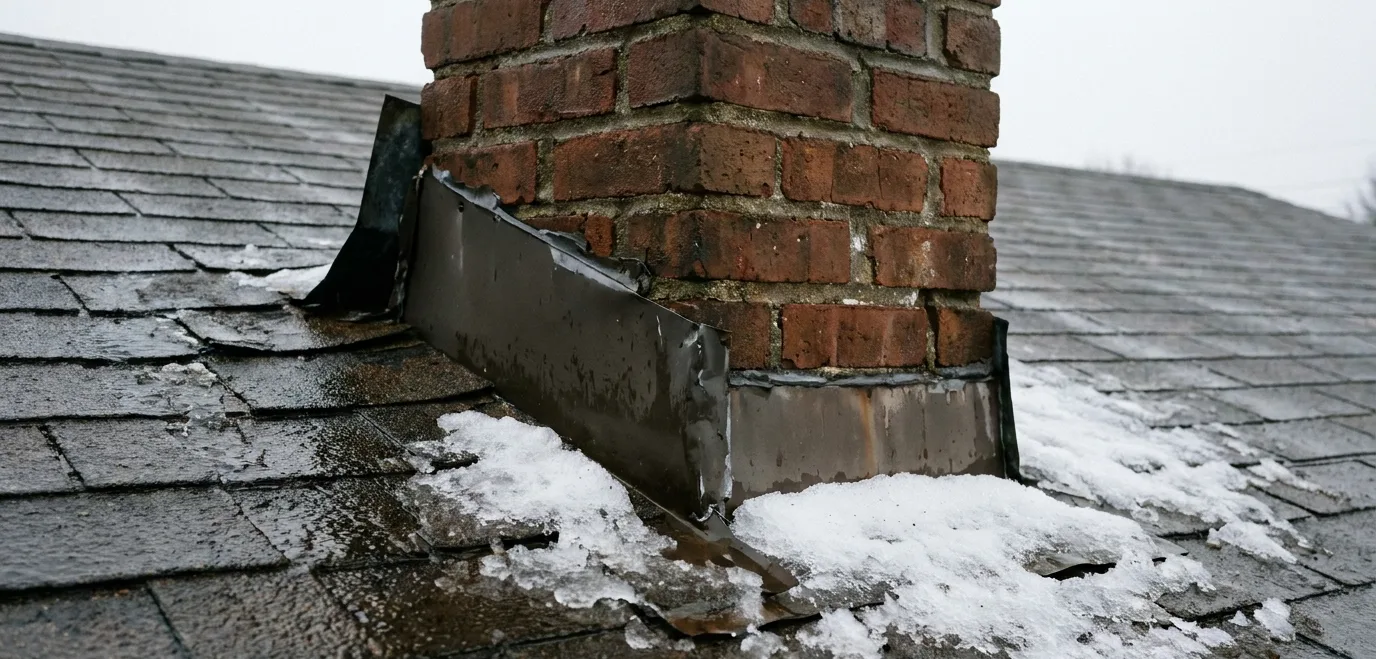
Warning Signs of Flashing Failure
- Dark water stains forming on ceiling drywall below roof valleys
- Drips appearing inside the attic after moderate rainfall
- Rust streaks visible on metal strips at chimney bases
- Shingle edges curling upward along wall intersections
- Mold odor rising from insulation near plumbing vents
Weather Effects on Roof Flashing
Daily temperature swings make aluminum and steel flashing expand and contract at different rates than the wood deck beneath it. This movement cracks old sealant beads and pulls fasteners loose, especially along south-facing slopes where heat builds most. Freeze-thaw cycles then force ice crystals into those openings, widening them further with each winter.
Heavy snow accumulation adds downward pressure that can bend step flashing outward, breaking the overlap seal. Once displaced, even light rain runs behind the metal and soaks the felt paper. Our technicians measure the angle and overlap of each piece to determine whether resealing will hold or full replacement is required.
Inspection Points Our Technicians Measure
Technicians start at the roof edge and follow every flashing line, checking for proper 2-inch overlap on step flashing and adequate counter-flashing depth into masonry. They measure the height of existing flashing above the roof plane to confirm it meets code slope requirements. Nail spacing and sealant condition are recorded at each penetration.
Valleys receive close attention because water volume concentrates there. Any gap wider than 1/8 inch or visible daylight through joints is noted. Attic inspection follows to trace stains back to their exact entry point, confirming the leak source before repair begins.
Repair and Install Options
When flashing remains sound but sealant has failed, technicians remove old caulk, clean surfaces, and apply new high-temperature butyl tape followed by a compatible roof sealant. Severely corroded sections are cut out and new pieces slipped under the shingles above and over the course below to restore continuous water shedding.
For chimney or sidewall flashing, new L-shaped metal is fabricated on site to match the existing profile. Step flashing is reinstalled course by course with each shingle tab lifted only enough to slide the new metal into place. This method avoids disturbing sound shingles while creating a watertight transition.
Materials Selected for Shingle Roofs
Aluminum flashing offers good corrosion resistance in most climates and bends easily around corners. Galvanized steel provides greater strength where snow load is heavy. Copper is used when matching historic roofs because it weathers to a protective patina. All new flashing receives a coat of compatible primer before installation.
Butyl rubber tape forms the primary seal under counter-flashing while asphalt-compatible caulk fills nail holes. Homeowners should first clear gutters and downspouts of debris so water flows freely away from the roof edge, then note the date and weather conditions when interior stains first appear to help locate the problem area quickly.
Flashing Repair questions
What causes flashing to leak on a shingle roof?
Thermal expansion from summer heat and contraction during freeze-thaw cycles loosen nails and crack sealant. Wind lifts edges while snow load bends metal outward. Once gaps form, water enters under shingles and reaches the deck regardless of shingle condition.
How do technicians decide between repair and replacement?
They check overlap depth, rust penetration, and whether fasteners still hold. If metal remains flat and overlaps meet minimum standards, resealing restores function. When corrosion has thinned the material or bends exceed 15 degrees, full section replacement prevents recurring leaks.
What should a homeowner check before calling for Flashing Repair?
Look inside the attic on a clear day for damp spots or darkened insulation near walls and vents. Note whether stains grow after rain or during snow melt. Remove loose debris from valleys only if safely reachable from the ground to improve drainage temporarily.
Which materials hold up best against seasonal weather?
Aluminum resists corrosion in wet climates while galvanized steel withstands snow load pressure. Butyl tape stays flexible through temperature swings better than standard caulk. Proper overlap and fastening keep water moving off the roof rather than behind the metal.
Request Flashing Repair
Contact Nez Perce County Pro Roofing Services to inspect flashing on your shingle roof.