Metal Roof Repair in the USA
Metal roofs expand and contract daily with temperature swings. Over years this movement loosens screws and cracks seam sealant. Our technicians at Nez Perce County Pro Roofing Services trace the exact points where water enters by following stain patterns inside the attic and measuring panel gaps with a feeler gauge. We then decide whether individual panels can be replaced or whether seams need new butyl tape and screws with EPDM washers.
Wind-driven rain forces water under laps while snow load presses panels against purlins until clips bend. Once clips deform, panels ride up and create new leak paths. Nez Perce County Pro Roofing Services crews carry replacement clips matched to the original gauge and profile so the repair matches the existing roof slope and wind rating without adding extra weight. Nez Perce County Pro Roofing Services examines each shingle row by row once metal roof repair finishes in the USA.
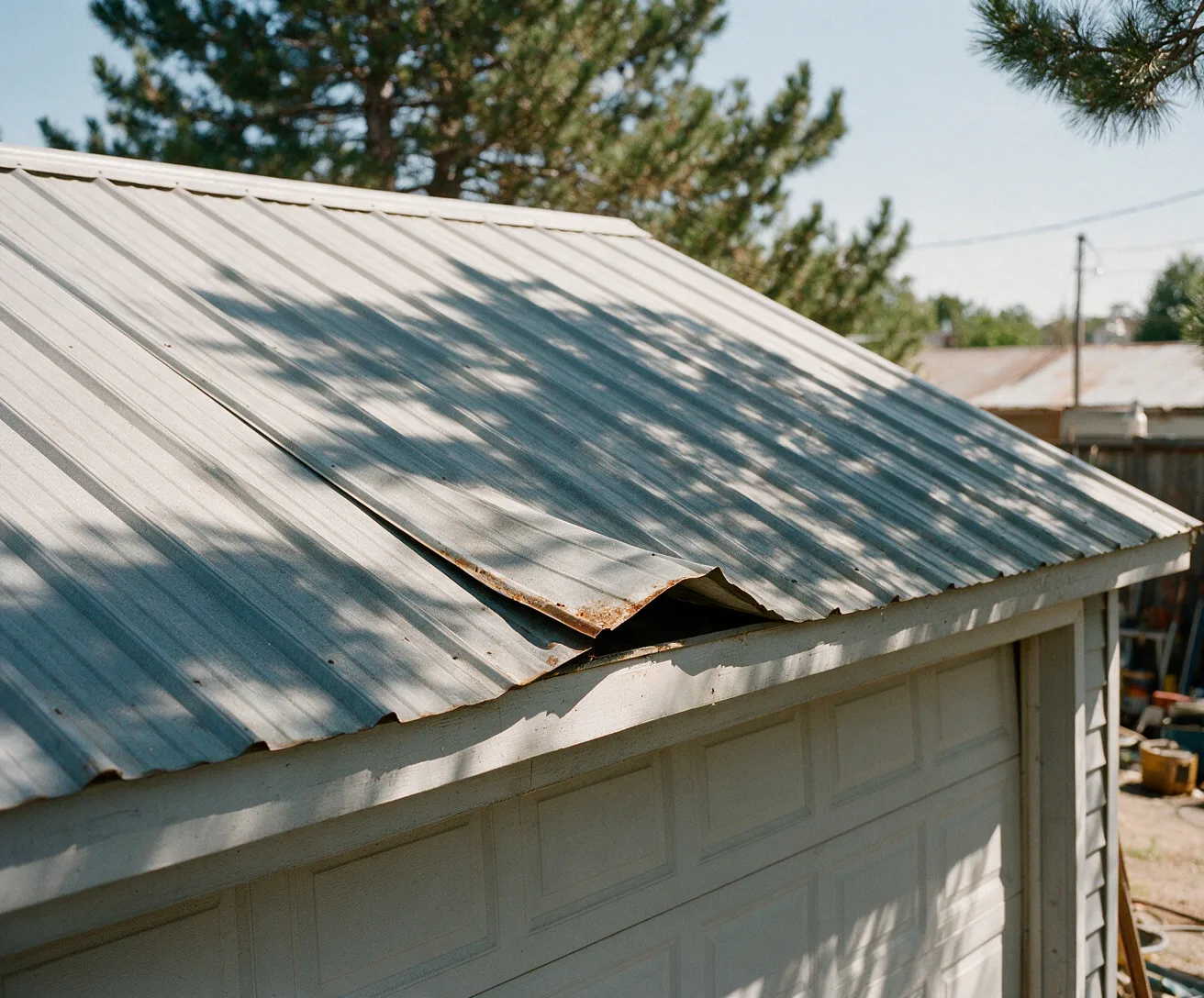
Visible and measurable indicators on metal roofs
- Rusted streaks below screw heads that widen after each freeze cycle.
- Seam gaps that open more than one eighth inch when panels are walked on.
- Popped rivets along ridge caps after high wind events.
- Drips at pipe boots where the rubber has hardened and cracked.
- Panel oil canning that increases in hot afternoon sun.
Fastener and seam assessment
Technicians first count and mark every fastener that shows rust or has backed out. They replace these with larger diameter screws that bite into the purlin at least three quarters of an inch. Each new screw receives a fresh EPDM washer set flush so the rubber seals against the metal without over-compression.
Standing seam roofs require different work. Crews check the factory-applied sealant inside the seam with a dental mirror. When sealant has pulled away, they clean the channel and inject new non-skinning butyl that remains flexible through repeated expansion cycles.
Where panels have shifted, crews install additional clips at mid-span to reduce flex. This stops the panel from oil-canning and reopening seams during the next heat wave.
Panel replacement and coating choices
Damaged panels are cut out at the seams using aviation snips and a nibbler to avoid creating burrs that could start new corrosion. The replacement panel is slid into the existing locks and fastened with the same clip spacing used originally so thermal movement stays uniform across the roof.
When rust covers less than ten percent of a panel surface, crews wire-brush to bare metal, apply rust converter, then two coats of acrylic elastomeric coating matched to the existing color. This extends service life without the cost of new steel.
Homeowners can safely walk the ground and note which panels show obvious dents or missing ridge-cap screws. Marking those locations with bright tape helps crews bring the correct profile and color match on the first visit.
Flashing integration at penetrations
Pipe boots and vent flashings on metal roofs fail when the rubber ages and shrinks. Technicians remove the old boot, clean the panel surface, and install a new boot with an aluminum base that is screwed through pre-formed holes into the panel ribs only. Sealant is applied under the base flange before the screws are tightened.
Valley and eave flashings are inspected for kinks that trap debris. Any section showing creases is cut out and replaced with new flashing bent to the original angle so water flows freely past the joint.
Skylight curbs receive new butyl tape under the counter-flashing before the flashing is re-secured. This detail prevents water from wicking under the curb during prolonged rain followed by wind.
Post-repair inspection steps
After repairs, crews spray water at each seam and penetration from a garden hose held at a low angle to simulate wind-driven rain. Any moisture that appears on the underside is marked and corrected before the crew leaves.
Attic insulation near repaired areas is checked for dampness. Wet spots are noted so the homeowner can schedule ventilation adjustments if needed. No interior work is performed by the roofing crew.
A final walk-around from the ground confirms all replaced panels align with the original roof plane and that no tools or debris remain on the surface.
Metal Roof Repair questions
How do crews decide between patching and panel replacement?
Technicians measure the length of corroded area and the remaining metal thickness with a micrometer. If more than twenty percent of the panel width is thinned below the original gauge, the entire panel is replaced so the seam locks stay uniform and future leaks are prevented.
What type of sealant lasts longest on metal seams?
Non-skinning butyl tape stays flexible through hundreds of expansion cycles. It is applied only after the seam is cleaned of old caulk and dust. The tape is then covered by the overlapping panel so ultraviolet light never reaches it.
Can a homeowner safely check fasteners from a ladder?
From a stable ladder a homeowner may look for rust streaks running down the panel face below screw heads. Any screw that turns by hand should be noted but not tightened further until a technician arrives with the correct replacement size.
How does thermal movement affect long panels?
Panels longer than twenty feet require floating clips that allow the metal to slide. When fixed screws are added midway, the panel bows in summer heat. Crews replace those fixed screws with floating clips during repair to restore correct movement.
Schedule Metal Roof Repair
Contact Nez Perce County Pro Roofing Services to inspect metal roof seams and fasteners before the next freeze-thaw cycle.