
Roof Replacement in the USA
Nez Perce County Pro Roofing Services evaluates entire roof surfaces before committing to full replacement. Multiple layers of shingles trap heat and trap moisture against decking boards, causing rot that spreads from ridge to eave. Our technicians count existing layers, measure rafter spacing and test deck deflection under foot pressure to decide whether a complete tear-off is required.
Shingle tabs that have lost granular coating turn brittle and crack along the edges where wind lifts them repeatedly. Snow load compresses underlayment seams until water finds nail penetrations. When these conditions appear across more than one slope we schedule removal of all materials down to the deck so new felt or synthetic underlayment can lie flat without bridging. Throughout the USA seasonal shifts make post roof replacement inspections essential and Nez Perce County Pro Roofing Services performs them carefully.
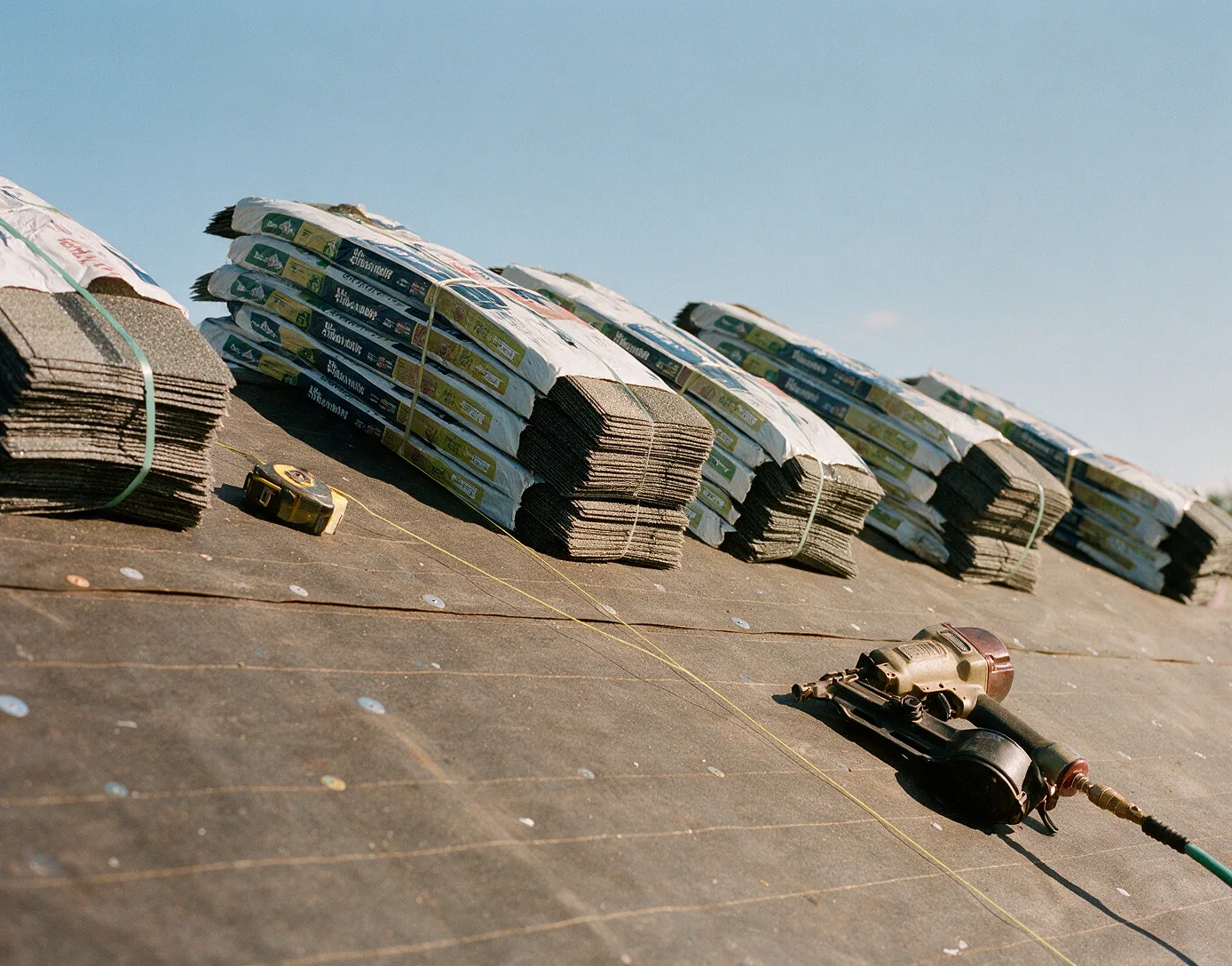
Visible Indicators Replacement Is Needed
- Curling edges expose underlayment across entire slopes.
- Missing tabs leave rows of exposed fasteners that rust.
- Granule loss leaves dark patches where asphalt shows through.
- Sagging areas between rafters indicate deck movement under load.
- Multiple layers create raised seams that collect ice and debris.
How Weather Cycles Drive Full Replacement
Daily heat expansion followed by nighttime contraction loosens the adhesive strips that hold shingles together. Over several seasons the sealant fails along the bottom edge of each tab, allowing wind to pry them upward. Once that happens across multiple courses, patching individual tabs no longer restores wind resistance.
Freeze-thaw cycles force water into micro-cracks in the asphalt coating. Ice crystals widen those cracks until the shingle surface flakes away. Snow load adds downward pressure that flattens the remaining granules and compresses the mat, reducing the roof's ability to shed water during the next thaw.
What Technicians Measure Before Starting Work
Our technicians walk every slope and mark soft spots where decking has lost stiffness. They measure the distance between rafters and check that new underlayment will have continuous support. Nail patterns from previous layers are counted so the crew knows how many fasteners must be removed during tear-off.
Ventilation openings are inspected to confirm they meet the square-foot ratio required for the new shingle system. Ridge vent length is recorded so the replacement can maintain airflow without creating new penetrations through the deck.
Tear-Off Process and Layer Removal
Complete removal begins at the ridge and proceeds downward so debris does not slide onto finished surfaces. Each layer is lifted in sections so the crew can examine the deck for rot or delamination as work advances. Old nails are pulled or driven flush rather than left to puncture the new membrane.
After the deck is cleared, any warped boards are replaced and seams are covered with strips of ice-and-water membrane. This step prevents future leaks at joints where temperature changes cause movement.
Materials Placed During Replacement
Synthetic underlayment is rolled out horizontally with six-inch overlaps at seams. Starter strips with factory sealant are installed along every eave and rake to lock the first course against wind-driven rain. Three-tab or architectural shingles are then laid in straight courses with offset joints so no two layers align vertically.
Ridge cap shingles are cut from the same bundle and sealed with dabs of roofing cement at each end. Pipe boots are formed from pre-molded rubber flashed with additional membrane pieces so expansion and contraction do not separate the seal.
Roof Replacement questions
When does a roof need full replacement instead of repair?
When three or more layers exist or when deck deflection exceeds one-quarter inch between rafters, individual shingle fixes cannot restore structural integrity. Full removal lets technicians inspect every board and install fresh underlayment without trapped moisture.
How do crews handle existing ventilation during replacement?
Technicians measure intake and exhaust openings before tear-off. Ridge vents are reinstalled or extended so the new shingle system maintains the same net free area and prevents heat buildup that shortens shingle life.
What happens to old fasteners during layer removal?
Every exposed nail is extracted or driven flush. Leftover fasteners create puncture points in the new underlayment, so crews sweep the deck twice and use magnetic rollers to locate any remaining metal before synthetic felt is applied.
Can homeowners check anything safely from the ground?
Look for rows of missing tabs and dark streaks where granules have washed away. Note any sagging along the eaves that follows rafter lines. These observations help technicians decide whether a full inspection from the attic is needed next.
Schedule Roof Replacement Assessment
Contact Nez Perce County Pro Roofing Services to evaluate whether your roof requires complete replacement.