
Storm Damage Repair in the USA
High winds pry up shingle tabs along the leading edge while hail strikes create circular depressions that expose mat layers to ultraviolet light. Our technicians begin every Storm Damage Repair by walking the slope to mark impact points and measure lifted edges before any work starts.
Freeze-thaw cycles after a storm widen small cracks around pipe boots and step flashing. Snow load from a single heavy event can bow rafters enough to open seams, allowing meltwater to track under the underlayment and reach interior ceilings. A sound repair means lifting and replacing individual shingles after storm damage repair so reach Nez Perce County Pro Roofing Services in USA.
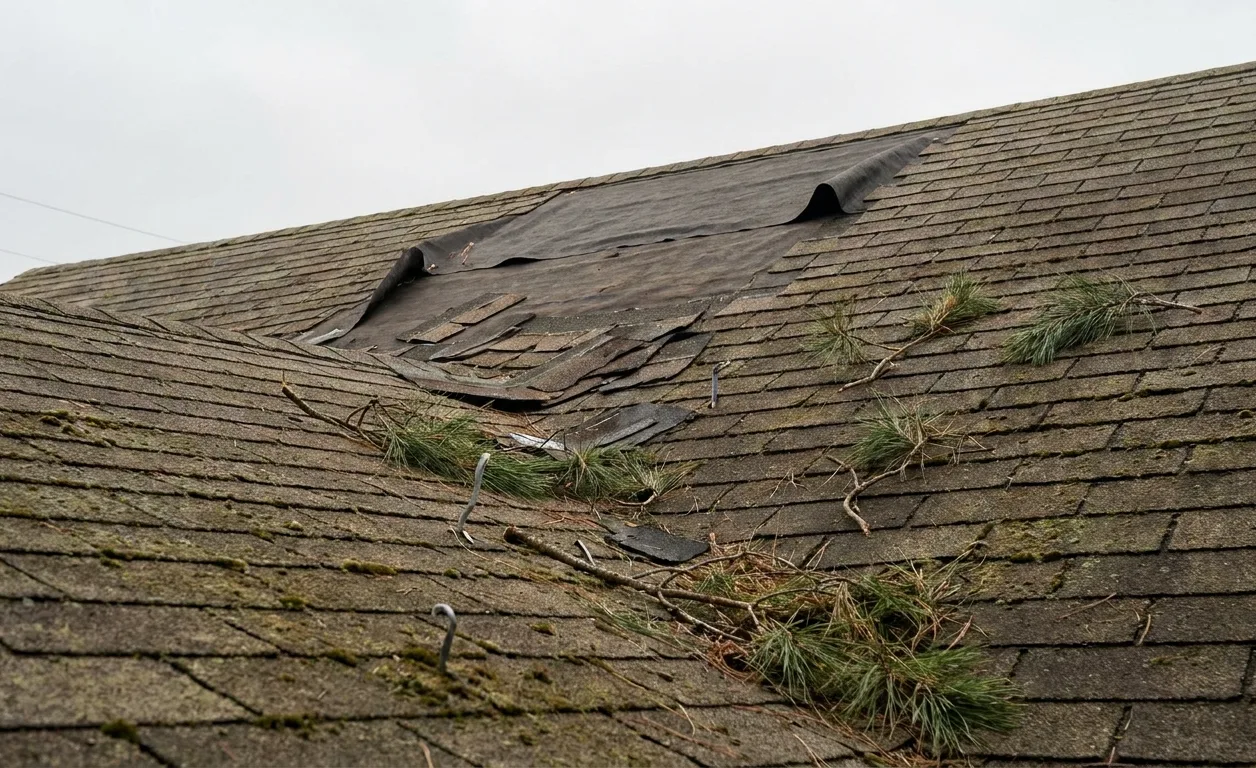
Visible Indicators After Wind or Hail Events
- Shingle tabs curled or missing along eaves and ridges
- Granule loss in round patterns on south-facing slopes
- Flashing pulled away at valleys and chimney bases
- Ridge vent sections twisted or detached from decking
- Interior ceiling stains appearing days after rainfall
How Wind and Hail Alter Shingle Roofs
Wind gusts above forty miles per hour catch the leading edge of each tab and fold it backward, breaking the self-seal strip. Once the seal is broken, subsequent gusts tear the shingle free at the nail line, exposing felt and decking to direct rain. Hail stones larger than three-quarters of an inch fracture the surface granules and dent the fiberglass mat, creating pathways for water to wick into the reinforcement layers.
Our crews record wind direction on each job because north-facing slopes often show less damage while south and west exposures receive the brunt of both wind and hail. Measuring dent depth helps separate cosmetic surface loss from structural mat fractures that require tab replacement.
Inspection Steps Performed on Site
Technicians first examine the perimeter from the ground with binoculars to locate missing shingles and displaced ridge vent sections. On the roof they lift suspect tabs to check for pulled nails, measure remaining seal-strip adhesion, and probe the underlayment for softness around hail strikes. Flashing joints are tested with a flat bar to see whether fasteners have backed out or the metal has deformed.
Ridge and soffit vents receive special attention because storm pressure can reverse airflow and force water under the cap shingles. Each vent section is checked for secure nailing and proper overlap before any repair proceeds.
Repair Methods and Replacement Materials
Isolated wind damage is corrected by sliding a new shingle under the course above and nailing it through the existing tab so the head is covered. Hail-cratered shingles are cut out and replaced with matching three-tab or architectural products; granule color is matched by comparing a wet sample to new stock under daylight. Step flashing and counter-flashing are removed only when deformation prevents proper overlap, then reinstalled with fresh roofing nails and butyl sealant at joints.
When multiple slopes show widespread granule loss, crews install new underlayment over the affected decking before laying fresh shingles. Ridge vents are replaced as complete units rather than patched to maintain consistent airflow and snow infiltration protection.
First Actions for Property Owners
Stay on the ground and note the location of any interior water stains or active drips, then photograph exterior shingles from a safe distance before rain returns. Place buckets under stains and move furniture away from affected ceilings to limit secondary damage. Do not climb onto the roof or attempt to reattach loose flashing, because additional weight or improper leverage can enlarge existing openings.
Contact Nez Perce County Pro Roofing Services to schedule an inspection that documents wind direction, hail size patterns, and exact material needs so repairs address the full extent of storm effects rather than isolated spots.
Storm Damage Repair questions
How does hail damage differ from normal weathering on shingles?
Hail creates distinct round craters that remove granules in a circular pattern and can crack the fiberglass mat. Normal weathering produces gradual, even granule loss across the entire surface without concentrated dents or mat fractures.
Can technicians repair only the damaged sections or must the whole roof be replaced?
When damage is limited to one or two slopes and the remaining shingles retain full seal-strip adhesion, targeted tab replacement and flashing resets restore the roof. Widespread mat fractures or multiple missing courses across several slopes require full replacement to maintain uniform wind resistance.
What materials are used during a typical Storm Damage Repair?
Matching three-tab or architectural shingles are selected by comparing wet samples under daylight. New step flashing, butyl sealant, and galvanized roofing nails secure the work. Ridge vent sections are replaced as complete assemblies to preserve airflow.
What should homeowners avoid doing after noticing storm damage?
Avoid walking on the roof or attempting to re-nail lifted shingles. Additional foot traffic can enlarge openings and dislodge more tabs. Do not apply tar or coatings, as these trap moisture and complicate later repairs.
Schedule Storm Damage Repair
Nez Perce County Pro Roofing Services restores shingle roofs across the USA after wind, hail and ice events.