
Ice Dam Repair in the USA
Ice dams form when attic heat melts snow on the upper roof while the eaves stay below freezing. The resulting water backs up under shingles and soaks the deck. Our technicians map temperature differences along the roof plane before any work begins.
Wind driven snow packs into valleys and against step flashing, adding load that widens small gaps. Once melt water reaches those gaps it travels laterally and stains ceilings below. We measure deck moisture and note every shingle lifted by ice expansion. Heat exposure following ice dam repair accelerates granule loss on shingles therefore Nez Perce County Pro Roofing Services recommends checks nationwide.
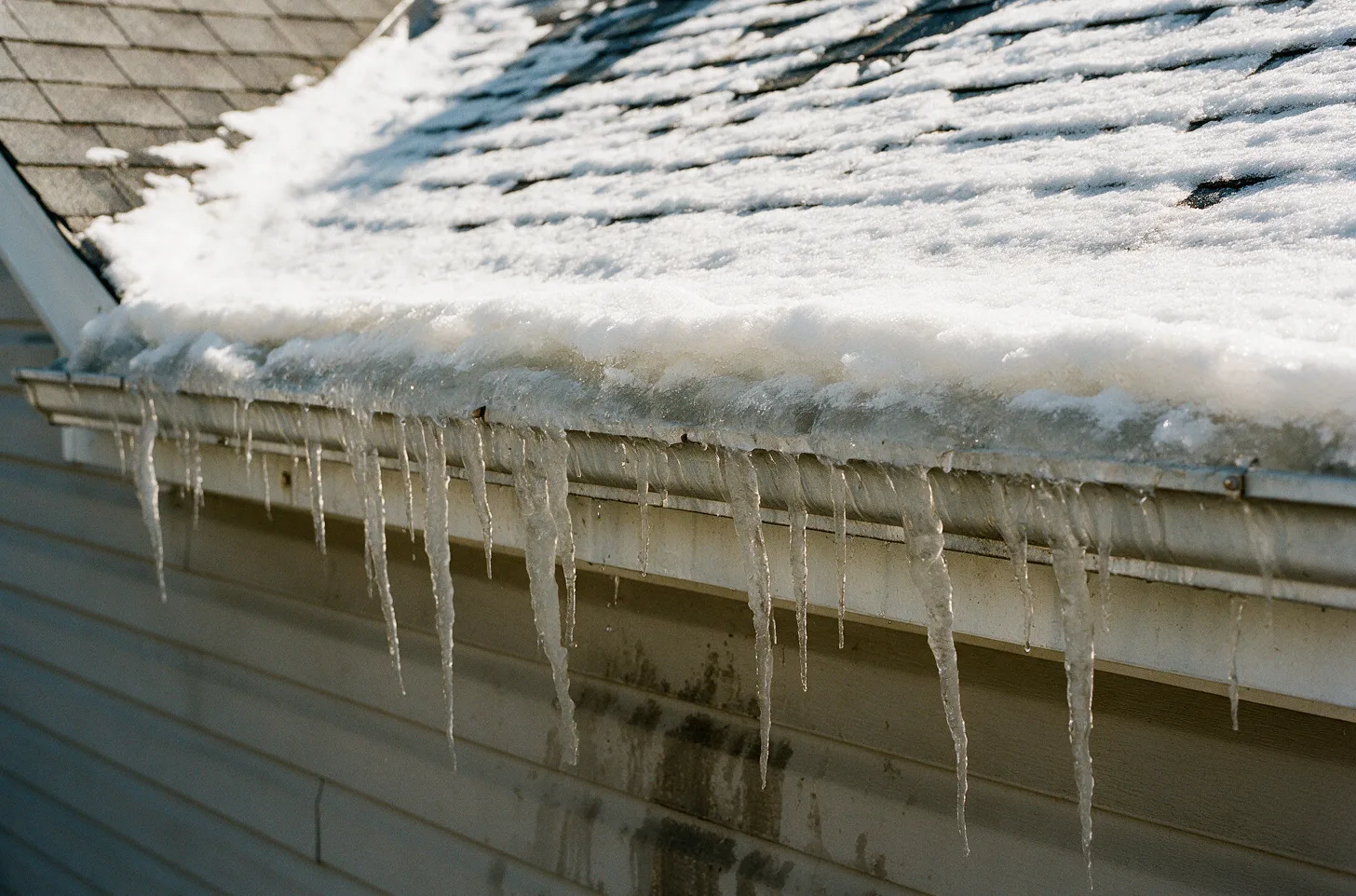
Visible Indicators of Ice Dams
- Rows of icicles hanging past the gutter line after overnight freeze
- Dark water stains appearing on attic sheathing near the eaves
- Ceiling drywall softening or paint bubbling directly below the roof edge
- Shingles that curl or lift along the first three courses above the gutter
- Heavy snow load remaining on the upper roof while lower edges stay bare
How Freeze Thaw Cycles Damage Shingles
Repeated thawing above the insulation line and refreezing at the cold eave creates a wedge of ice that pries shingles upward. Each cycle drives more water beneath the tabs and saturates the underlayment. Technicians lift individual shingles to check for delamination and granule loss caused by this repeated movement.
Snow load compresses the ice mass against step flashing and valley metal. Once the mass melts from the top, water finds every nail hole and seam. We replace lifted shingles one by one and insert new ice and water membrane that extends past the typical backup line.
Poor attic ventilation allows warm air to rise along the underside of the deck, melting snow directly above the living space. We document ridge vent blockages and soffit intake restrictions so future heat loss is reduced.
Inspection Points and Measurements
Technicians begin at the ridge and work downward, recording insulation depth and any gaps over exterior walls. Infrared readings show warm stripes where heat escapes and melts snow. These stripes guide the placement of new baffles and additional insulation.
We probe the deck for softness with a moisture meter at three foot intervals along each eave. Flashing joints are checked for sealant failure and nail pop that allows water entry. Every measurement is recorded so the repair addresses the exact path of intrusion.
Gutter interiors are examined for packed ice that blocks drainage and forces water higher. Downspout connections are tested for flow once ice is cleared. Any obstruction is removed before new heat trace cable is installed.
Repair and Install Options
Ice is removed with care using plastic shovels and steam wands to avoid tearing shingles. Once the deck is clear we install self regulating heat cable along the lower four feet of roof and inside gutters. The cable is secured with clips that do not penetrate the weather surface.
Damaged shingles are lifted and replaced individually. An additional layer of ice and water shield is rolled out from the eave upward past the previous water line. This membrane adheres directly to the deck and seals around fasteners.
Where ventilation is insufficient we add intake vents at the soffit and ensure ridge vents remain unobstructed. These changes reduce attic temperature so new ice dams are less likely to form after the next snowfall.
Materials and Parts Used
Self regulating heat trace cable is chosen because it adjusts output as temperatures change and avoids overheating shingles. Clips are stainless steel and spaced to keep the cable in full contact with the roof plane.
High temperature ice and water shield is applied in overlapping courses. The membrane remains flexible at low temperatures and bonds to the deck without requiring additional fasteners along the eave.
Replacement shingles match the existing weight and color so the repaired section blends with surrounding courses. Ridge vent inserts and soffit baffles are added only where measurements show airflow is restricted.
Ice Dam Repair questions
What should a homeowner do first when ice dams appear?
Stay off the roof. Use a garden hose with warm water to melt a channel from the eave upward if the temperature allows, keeping water away from electrical lines. Note any interior ceiling stains and contact Nez Perce County Pro Roofing Services for a full inspection once conditions permit safe access.
How do ice dams affect flashing and vents?
Ice expands against step flashing and vent boots, loosening sealant and creating paths for water. Our technicians replace damaged flashing sections and reseal vent bases after the ice is cleared so melt water cannot enter those openings on the next cycle.
Can existing gutters contribute to ice dam formation?
Yes. Packed snow and debris inside gutters hold ice against the roof edge and block drainage. We clean gutters completely and install heat cable inside the trough so water flows freely instead of backing up under the first courses of shingles.
What attic changes reduce future ice dam risk?
Adding baffles over exterior walls and ensuring ridge vents are clear allows cold air to flow under the deck. This keeps the roof surface temperature closer to outside air and limits melt water that refreezes at the eaves.
Schedule Ice Dam Repair
Nez Perce County Pro Roofing Services restores roof edges after ice dam damage across the USA.